Brand: Jahy2Tech
Color: green
Features:
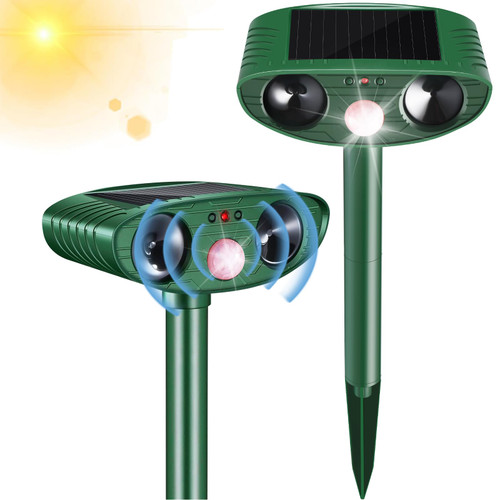
- 【Deer Deterrent for Vegetable Gardens & Flower Beds】Protect the areas you have worked all season to grow. Protect vegetables, flowers, and landscaping from unwanted deer activity. The 110° PIR sensor detects approaching movement from approximately 25–30 ft and activates automatically. Place this motion activated animal deterrent near garden beds, planters, or common entry paths as a practical deer repellent for garden and yard areas.
- 【Nighttime Lawn Deterrence for Raccoons & Skunks】Help discourage unwanted nighttime activity around lawns, yard edges, patios, trash areas, and common animal routes. When motion is detected, ultrasonic sound to create an immediate audio and visual response. Use this outdoor animal repellent as a raccoon deterrent outdoors or ultrasonic skunk repellent to help interrupt roaming, digging, and repeated approaches around treated areas.
- 【Rabbit Deterrent for Raised Beds & Low-Growing Plants】Help protect raised beds, vegetables, flowers, and low-growing plants from rabbits and other small animals. This ultrasonic animal repellent cycles through 13.5–45.5 kHz frequencies. Place it near garden beds, flower borders, or entry paths as a rabbit repellent for garden areas, while also helping discourage squirrels and stray cats.
- 【Spray-Free, Bait-Free Outdoor Deterrence】Help discourage feeding, digging, and repeated visits without liquid sprays, bait, traps, or residue on plants and outdoor surfaces. Suitable for gardens, lawns, patios, planters, and trash areas. Avoid aiming the device toward areas where pets spend extended periods.
Details: Product Specifications Activation: PIR Motion Activated Ultrasonic Frequency: 13–45kHz Variable Frequency PIR Sensing Angle: 130° Motion Detection Distance: Up to Approximately 33 ft Power Source: Integrated Solar Panel Weather Resistance: IP65 Weather Resistant Suggested Height for Small Animals: Approximately 9–10 Inches Recommended Observation Period: Approximately 2–3 Weeks Smarter Placement for Outdoor Animal Activity Place the animal repellent outdoor near routes where activity is commonly noticed, such as fence gaps, garden paths, planting areas or property edges. Check for tracks, disturbed soil or damaged plants, then aim the PIR sensor toward the approach direction. Keep the Detection Area Open For better motion detection, keep tall grass, dense shrubs, branches and large objects away from the front of the ultrasonic animal repeller outdoor. An open sensing path helps the unit respond as animals approach. Solar Charging & Outdoor Placement Position the solar animal repeller where the panel receives direct sunlight. Shade, cloudy weather and seasonal daylight can affect charging. The IP65 weather-resistant housing is suitable for normal outdoor exposure but should not be submerged. Adjust Height for Different Animals For deer deterrent use, aim the sensor toward the animal’s body level near flower beds, hostas or vegetable gardens. For rabbits and squirrels, place the sensor about 9–10 inches above the ground near low garden borders or entry points. Target Nighttime & Pet Routes For raccoon deterrent use, aim toward routes leading to trash areas, compost, ponds or garden edges. For cat repellent or dog repellent for yard use, position the sensor toward the paths animals commonly use to enter lawns, patios or planting areas. Use Multiple Units for Multiple Entry Points Each unit works best facing one main approach direction. If animals enter from several areas, place separate units near different fence gaps, garden paths or side-yard routes. Monitor activity for 2–3 weeks and adjust height, angle or location as needed. Q: How should deer repellent devices be positioned around a garden? A: Place the unit along an open route deer normally use to approach flowers, vegetables or landscaping. Raise the PIR sensor toward body level and keep branches or dense plants from blocking the front of the device. Q: Where should solar deer repellent devices receive sunlight? A: Position the solar panel where it can receive direct sunlight for daily charging. Avoid heavy tree shade, roof overhangs or other locations that keep the panel covered for long periods. Q: Can this help keep deer out of garden areas? A: The device is designed to help discourage repeated deer activity around planting areas. Placement, existing feeding habits, surrounding food sources and animal routes can affect results, so observe activity and adjust the location when needed. Q: How should a rabbit repellent outdoor device be installed? A: Rabbits move close to the ground, so position the PIR sensor approximately 9–10 inches above the surface and aim it across routes near seedlings, vegetable rows or low garden borders. Q: Is the device suitable as a squirrel deterrent? A: Yes. For squirrels, use lower placement and aim the sensor toward fence gaps, lawn edges or garden borders where squirrel activity is regularly noticed. Q: Where should a squirrel repellent outdoor unit be placed? A: Position it along a frequently used low approach route rather than in an open area with no visible activity. Keep grass, leaves and branches away from the front of the sensor. Q: How should I use it as a raccoon deterrent outdoor? A: Aim the unit toward open nighttime routes leading to trash, compost, ponds or planting areas. The PIR sensor should have a clear view of the direction raccoons normally approach. Q: Can it be used as a cat deterrent outdoor? A: Position the sensor toward the route stray cats commonly use to enter patios, lawns or garden areas. Adjust the height and angle based on the path where activity is observed. Q: How does the motion activated cat deterrent function work? A: When movement enters the PIR sensing area, the unit automatically activates its ultrasonic and flashing-light response. Keep the sensor path clear so approaching movement can be detected more consistently. Q: What does the 33 ft specification mean? A: Up to approximately 33 ft refers to the PIR motion-detection distance under suitable placement conditions. It does not mean one unit provides guaranteed complete coverage of an entire 33 ft area. Q: Can several units be used around the same property? A: Yes. When animals enter from different directions, aim separate units toward different fence gaps, garden paths or approach routes instead of pointing all units toward the same area. Q: How long should I observe the placement before making changes? A: Use the device continuously for approximately 2–3 weeks while watching tracks, plant damage and changes in animal routes. Adju